
On Soil
I love dirt.

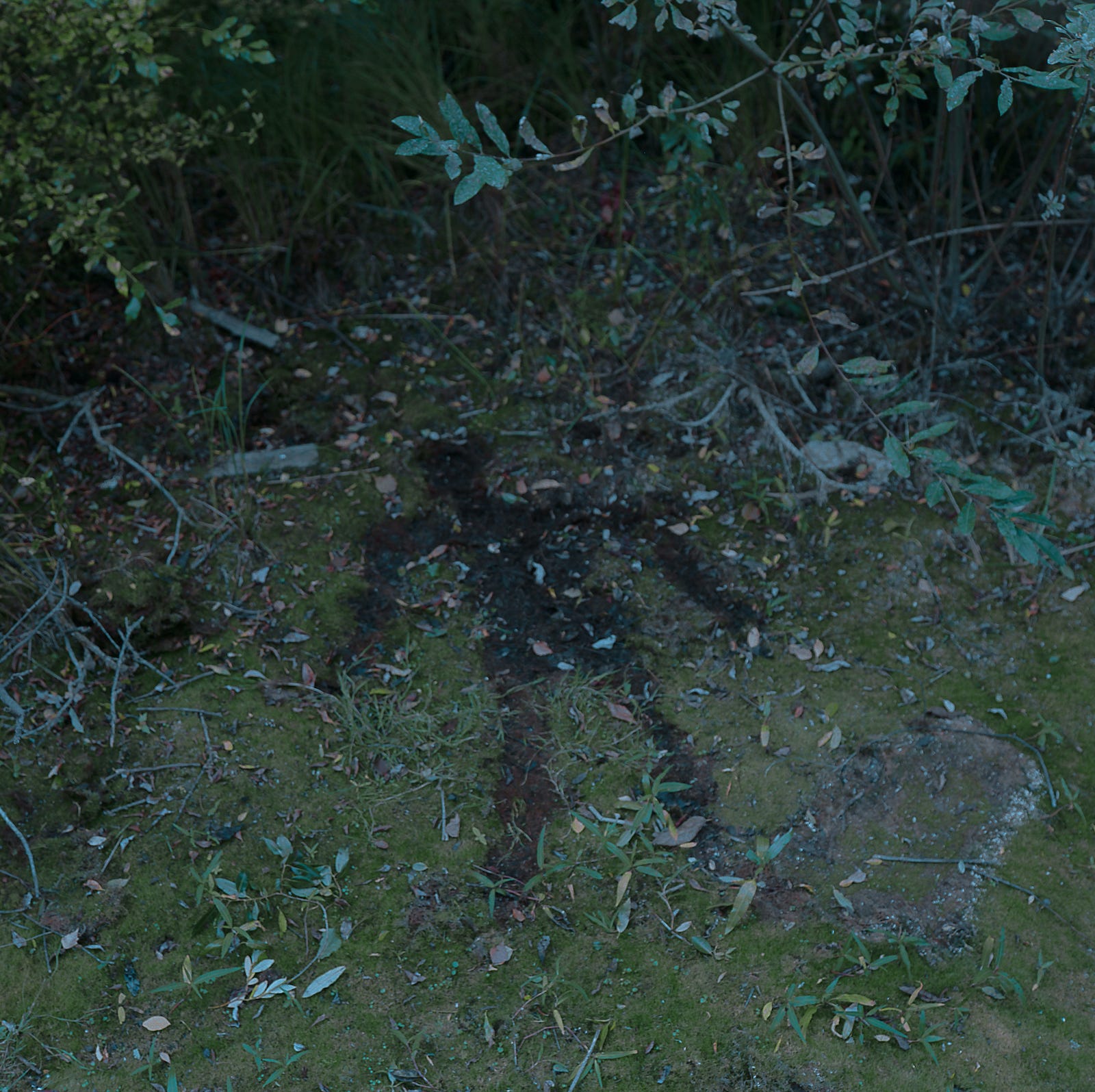
When I was young, I would make elaborate, muddy water concoctions in the back garden. Crouched down by the water spigot, I would mix my potions in a plastic pail, sprinkling in handfuls of grass, crumbled dried leaves, broken twigs, and pink flower petals. With this beverage, I could cure any affliction, heal any wound. This was serious business. Lives depended on me.
According to the experts over at Wikipedia, soil is a wondrous mix of organic matter, minerals, gasses, liquids and various organisms, namely microbes, plants, fungi, and small animals. Not to me, nor to most human children. To me, soil was a supernatural substance, a magical powder I had to wield responsibly, whose powers I had to keep hidden, lest the word get out that magic lay dormant within the ground we walked on.
I was a self-important child.
Geophagia has been noted nearly universally in human societies across geography and time.1 Pliny the Elder and Hippocrates both wrote about the practice, and Aulus Cornelius Celsus, a Roman encyclopedist, even seemed to link geophagia with anemia, a keen intuition, given our current understandings of pica.2
I never actually drank my soil-water creations. I did try, once, but I’m afraid I just didn’t have the taste for it. Nevertheless, I held these potions, these natural tonics, these earthy serums, as sacred. I was certain—I just knew—that the dry soil in the backyard of my childhood home had powers the depth of which I didn’t understand.
This seems to be a common theme. Who hasn’t made mud pie, after all? Who hasn’t made delicious soup from playground sand? Dirt is all around us—of course children try to put it in their mouths as soon as they develop the skill of grasping. Ah, soil, the original ingredient.
Literally.
Adam was made from soil in the Bible, men are made from sand in Norse mythology, man was made from clay in the Quran, Sumerian gods made men from clay and blood. No need to explain the metaphor here—soil is what gives life, after all, and this fertility was held all the more sacred in early agricultural societies. Clay, in particular, is the most moldable of soils, returning over and over in these miraculous creations.3
So we were created from soil. And from soil we continue to create.
Pottery is one of the oldest crafts in human history. The most ancient pieces of pottery have been traced to the Dawenko and Longshan cultures of Neolithic China.4 But humanity quickly went past making literal vessels.
We started making avatars.
Some may call it hubris. Some may call it fear. Some may call it our drive to try to understand it all, to try to explain everything, to unearth a universal truth that undoubtedly exists (it has to) in how we were made. We made armies from terracotta, effigies from clay, figurines of our gods and our families and even our pets. We did it for protection, we did it for communication, we did it for the simple reason that sometimes, we need to look at an image of ourselves, if only to try to understand it.
We have been recreating our own creation since the beginning.
So we were created from soil. We are also defined by it.
The soil of our homeland is unequivocally ours—it represents our home, our heritage, us. For you are dust, and to dust you shall return (forgive the excess Genesis references). Who hasn’t had the thought, away from home, that the earth here is different than mine, this is not my soil, this is not my land? When I come back home from a trip, I find myself noticing these things.
Yes, I am home. The dirt on my boots is the right shade of black. There are pine needles mixed in, this is right. The earth back there was too dry, too brown. Good thing I am back now.
Being homesick turns you into a fantastic ecologist.
I read a wonderful article recently. In it, Maria Ermolenko, a Russian artist and photographer, speaks about the mystic power of the earth:
“In the past, they used to bury people in the foetal position, which symbolised death as homecoming, the tomb as a womb. People used to carry soil from the home inside a medallion when they travelled, and if someone died abroad, they tried to throw a handful of their native soil onto the grave. If a person made a promise, and swore on the Earth, they would not break that vow.”
— Maria Ermolenko, interviewed by Masha Borodacheva for Calvert Journal
Indeed, there is a belonging that exists here. We come from soil, we create from it, and at the very end, we must return to it. So many ask to be buried where they were born, an intrinsic need, perhaps, to fulfill the cycle. To keep it unbroken, intact. The tomb as a womb. The ouroboros of soil.
This is also terrifying. We come from soil. We return to it. There is nothing we can do to prevent returning to it.
There is a picture book called Golem, written and illustrated by David Wisniewski. I first came across it when it was covered in a (highly recommended) video essay by Jacob Geller. In Jewish folklore, a golem is created from clay or mud, then brought to life, typically to serve and protect its creator. There is a line from this picture book that has stuck with me. At the end of the story, the golem is dissolved by his creator. As he sinks back into clay, he cries out a final plea.
‘“Please!” Golem cried. “Please let me live! I did all that you asked of me! Life is so… precious… to me!” With that, he collapsed into clay.’
— David Wisniewski, from Golem (1996)
Life is so… precious… to me.
To clay I will return.
Across these metaphors, soil is anthropomorphized. How could it not be? It feeds us, it homes us, it births us. Mother Earth is a cross-cultural concept.
If we love the Earth as an individual, as a mother, a sister, a friend, she will love us right back. If we do not, she will remove her love, as punishment or revenge, perhaps, though I do not like this nomination—I prefer to see it as a form of self-preservation.
I am thinking about language. If we hold soil as sacred, if we can revere dirt, how do we think about the words soiled and dirty? Is soil only sacred if it is not touching us? Has our 21st century culture asepticized us, broken the ancient links between man and earth?
To this I say: undoubtedly. Capitalism continues to try to separate us from nature, from land, from regenerative indigenous beliefs.
But language matters. It has power. It impacts how we conceptualize things.
My hands are soiled when they are drowned in blood.
My hands are soiled when I lift them from the rich and fragrant earth.
Time for some dirty, dirty miscellanea. You know what I mean.
The Ermolenko article I wrote about: Flesh of flesh: the photographer shaping a new reality through ancient Russian rituals
A tutorial for growing a chair made from soil, grass, and cardboard
“Leaf,” by Seán Hewitt
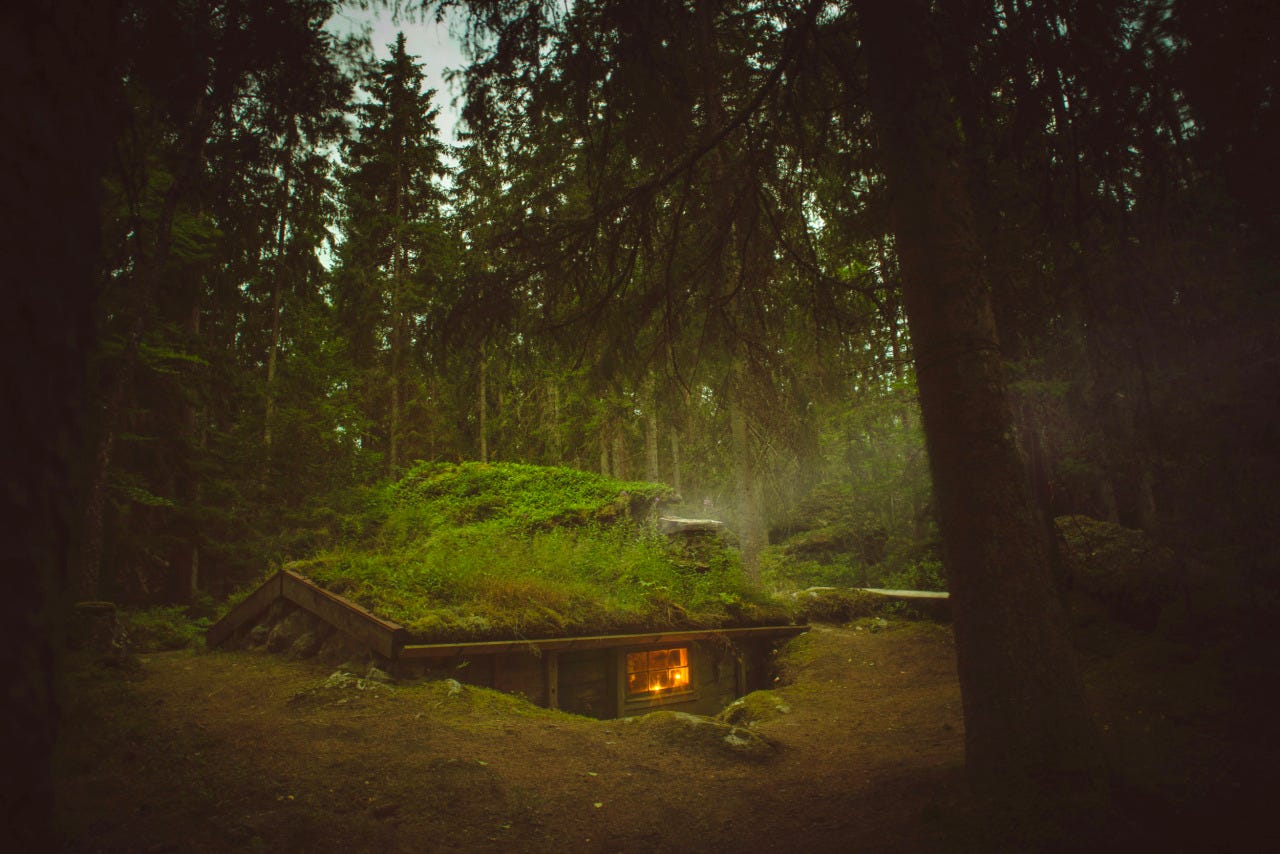
This earthen cabin in Sweden, dating back to the 1800s
Thanks for reading. Endless love. Eat a Peach.
Woywodt A, Kiss A. Geophagia: the history of earth-eating. JRSM. 2002;95(3):143-146. https://doi.org/10.1258/jrsm.95.3.143
Craving and chewing ice: A sign of anemia? Mayo Clinic. Published 2018. https://www.mayoclinic.org/diseases-conditions/iron-deficiency-anemia/expert-answers/chewing-ice/faq-20057982
Creation of life from clay. Wikipedia. Published November 26, 2023. https://en.wikipedia.org/wiki/Creation_of_life_from_clay
Neolithic Pottery. University of Washington. https://depts.washington.edu/chinaciv/archae/tdwkpott.htm